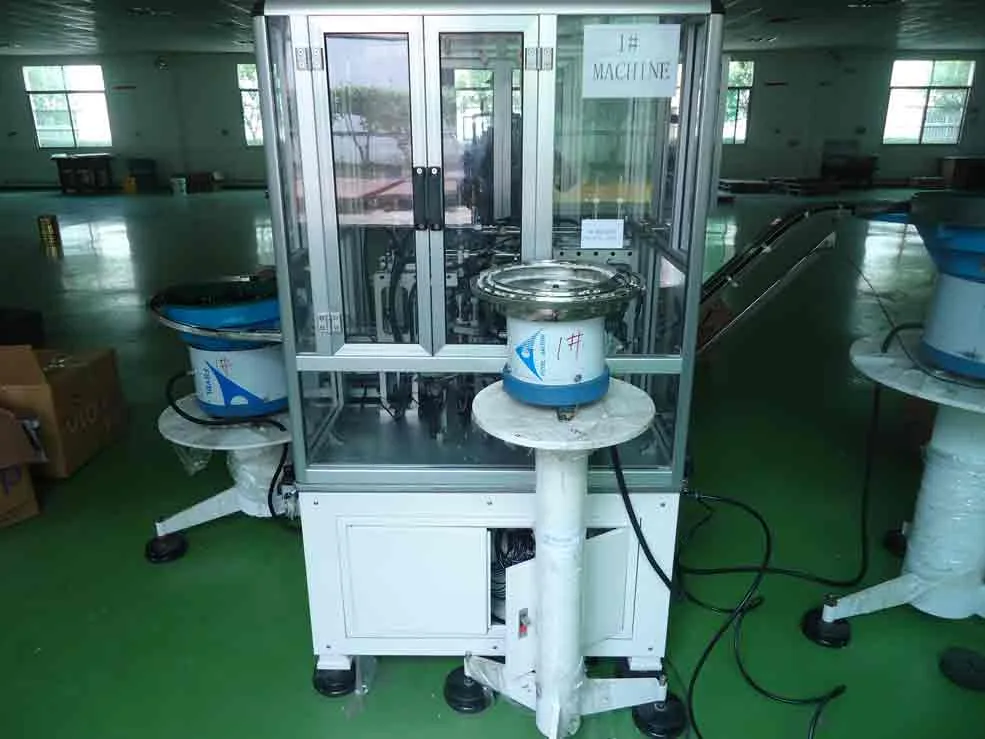
Foam pump assembly machine
Body, stem, spring, ball valve, gasket and dip tube, with a prime and leak check before discharge. Six process stations plus test, one operator.
servo / pneumatic
PLC + HMI
custom fixture
PLC + HMI
custom fixture
Three numbers decide the layout of a foam pump line: output per stroke, annual volume, and how many pump sizes the line has to cover. A line that runs one size for years can be a single-station machine with a fixed fixture; a line that covers six sizes needs quick-change tooling and a station layout that survives a changeover without a full reset.
Body, stem, spring, ball valve, gasket and dip tube, with a prime and leak check before discharge. Six process stations plus test, one operator.
Most foam pump lines follow the same order: body feeding, stem and spring insertion, ball valve placement, gasket fitting, dip tube insertion, then a prime and leak check before discharge. What changes between projects is how the spring is oriented and whether the gasket is fitted before or after the stem. Both choices affect scrap rate far more than machine speed does.
Station layout, cycle time and price, with the feeding tooling and test station costed separately.
Bowl tooling and fixtures drawn for your part, agreed before any metal is cut.
Frame, stations, PLC program and guarding, built to the agreed drawing set.
Run with your own samples in Chashan, with a video and the reject count per station sent with the machine.
If the pump is still in development, send the current 3D model and tell us which dimensions are frozen. We quote the tooling that touches those dimensions first, so a later change does not invalidate the whole line.
2D drawing or STEP file of the pump, the material of each part, the bottle neck thread, and the leak limit you accept. That is enough to come back with a layout and a price.